
Show summary Hide summary
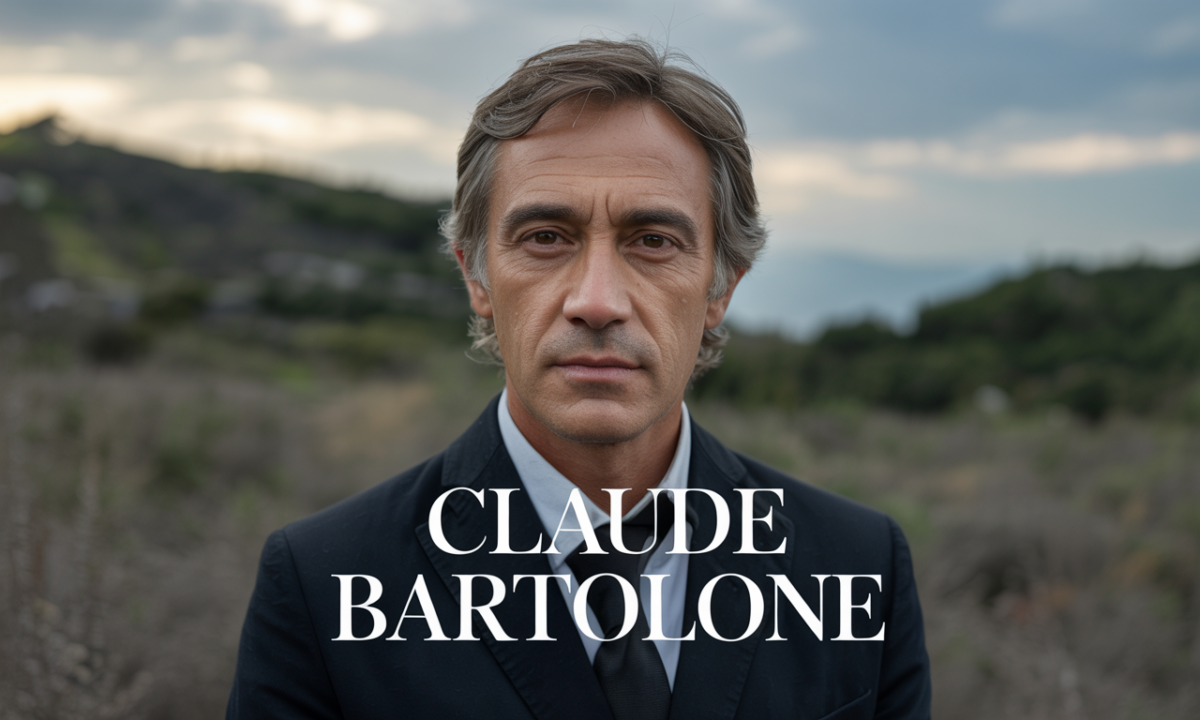
Claude Bartolone is a man who has crossed many worlds before becoming a major political figure in France. Born in Tunis on July 29, 1951, he landed in Seine-Saint-Denis at the age of 9, quite a cultural shock, you know. Imagine going from the Mediterranean and its scents to a working-class suburb of Paris, all in a very small two-room apartment. Honestly, it took courage.
His stature, in a figurative sense, was built on the streets of Pré-Saint-Gervais where he took his first steps at school. A young man with a strong accent, a mix of Maltese and Italian, who was sometimes looked at askance. But he held firm, with that faith in the republican school system to succeed. I admit that knowing he passed his baccalauréat, then earned a degree in mathematics, is surprising when you know the struggles of that area.
Fortune, by the way, for Claude Bartolone, is primarily a different story. Not one of material wealth, but of human wealth. His strength is a deep connection with Seine-Saint-Denis, a department he never abandoned, even as things started to shift drastically with the crisis, unemployment, and rising social tensions. Almost a personal challenge thrown at fate.
And then there was politics, an almost natural turning point. In 1974, he joined the Socialist Party, a strong choice for a young man from an immigrant background. His age at the time did not prevent him from being a fighter. In 1981, he became a deputy, one of the youngest in the National Assembly. A rise where you can sense all his determination and his somewhat blunt, direct, but always sincere style.
Claude Bartolone, a man shaped by his roots and his journey
Claude Bartolone is a mix of origins that is felt in his political commitment. Son of an Italian farm worker and a Maltese mother, he carries within him the stories of Mediterranean immigration. Moving his family to Seine-Saint-Denis in 1960 was not just a change of address, it was a leap into an uncertain future.
He grew up in the Jean-Jaurès housing estate, 32 rue d’Estienne d’Orves, a tiny apartment where there were five of them. You can imagine the tiny size of the living room. But this boy’s heart is immense, especially when he shares his memories of Anatole-France school. That place was not just a building, but the ground for a republican integration he lived from within.
So yes, there were some harsh looks, jokes about him coming “from elsewhere.” Yet Bartolone and his friends, like that Spanish Valera or Greek Ziliox, shared the same desire: to succeed. It didn’t just happen on the streets, but through high school, notably the famous Turgot High School he attended, and at Pierre-et-Marie-Curie University in Paris.
Since then, and despite the young age at which he took his first steps in worker and municipal politics, his identity has been built around this popular social anchoring that he never left. It is, of course, in this dual belonging—to the Mediterranean world and to the popular suburb—that the power of his public voice is partly explained.
The first steps of a young man in local and national politics
You know, before marking national politics, Claude Bartolone cut his teeth locally, close to home. At 26, he was already deputy mayor of Pré-Saint-Gervais. His first election dates back to 1977. Not common when you think that his family had left Tunisia just a few years earlier.
After that, things accelerated: general councillor in 1979, deputy in 1981, an age when most of his competitors were still proving themselves. This path is based on his commitment to the left, with a sharp eye on urban challenges, inequalities, and social diversity. He always believed that things could be changed through politics and work.
A major success: in 1998, under the Jospin government, he became Minister Delegate for the City. You know, that fits perfectly with his story. Rather than locking himself in speeches, he presented himself as “the mechanic minister.” A strong image, a guy who wants to get his hands dirty to fix the territories.
And he remains faithful to that, always alongside the inhabitants and local stakeholders. In 2008, he took the presidency of the Seine-Saint-Denis general council. And in 2012, his political fortune reached another peak: elected President of the National Assembly. He then became one of the pillars of the Republic.
A discreet private life but marked by loyalty
Claude Bartolone’s private life is a bit more discreet, but obviously important. What we know is that he is a man faithful to his roots and to those he loves. A real family, a wife, children. You can’t imagine, but keeping a balance between political immersion and personal life is another form of struggle.
He speaks little about his intimacy, preferring to highlight his public work. Yet it is part of him, a man who grew up in a small apartment and who maintains the same demands towards his close ones. This stability has certainly been a foundation that allowed him to overcome many often difficult stages in the political world.
This respect for privacy does not prevent him from being very open about his Mediterranean origins. He fully embraces his Italian and Maltese heritage, sharing it with a kind of quiet pride. This gives additional depth to his political discourse, always tinged with this affirmed humanism.
In his public appearances, whether at the Assembly or during his trips, you feel a nice sobriety, far from the exaggerations of some, but always with that impressive energy reflecting an intact passion.
Anecdotes and details that bring the character to life
You might guess that with such a journey, there are inevitably little stories behind. For example, his discovery of the family apartment once so large in his memories. Seeing this two-room apartment today, he asked himself: how could five people cram into such a small space?
Or that teacher who, in ninth grade, gave him a sign of hope: “We’ll do something with this little one.” Look where he ended up! It’s a moment that fits the spirit of a man who always knew how to keep faith in himself and in others.
His direct style, sometimes called blunt, earned him some enmities but also a lot of respect. He never sought to please. Some even say he is a “killer” in politics, but behind this expression is mainly a guy who knows where he is going and how to get there.
And then, let’s keep in mind the “clan des Tunes,” this group of friends and activists from similar Mediterranean origins, which marked part of the local political life. It’s no coincidence he is considered an essential figure of the 93.
Recent news and projects in 2026: the continuity of a commitment
In 2026, Claude Bartolone continues to play a role in the French political scene, even if he has not been at the institutional top for several years. He remains a respected face of the Socialist Party, highlighting his values of social justice and equality.
His focus still remains very local, notably with Seine-Saint-Denis, where he continues to be a valuable link between inhabitants, elected officials, and the State. His knowledge of the field remains a major asset at a time when politics can sometimes seem disconnected.
On the collaboration side, he recently worked with some figures like Martine Aubry or Bertrand Delanoë, on social cohesion projects aimed at strengthening popular neighborhoods and diversity. The fight for equality, you know, never stops.
He regularly publishes columns and speaks in several media, constantly reminding that the Republic cannot do without a real effort for those who do not always have the stature to make their voices heard. A message that echoes his lifelong fight.
- 🌟 His journey, an example of resilience
- 📚 His commitment to education and social diversity
- 🏛 His vision of politics close to citizens
- 🤝 His loyalty to Seine-Saint-Denis and its inhabitants
- 🎙 His frank but sincere style in public debate
To deepen your discovery, you can find his biography on the official National Assembly website or on his personal website. And if you prefer a more encyclopedic reading, Wikipedia also presents him in detail.
Why Claude Bartolone remains an essential political figure
Claude Bartolone is above all a guy who comes from humble origins and never forgot where he came from. His age may be over 70, but his passion for politics and social justice remains intact. He embodies that tenuous link between personal history and the great national story.
His fight for Seine-Saint-Denis, a department often complicated, has always been an engine. An engine that took him to the highest responsibilities and continues to drive his commitment. He has the conviction that opportunities are not given equally to all, but that we can still work on that.
His style is sometimes rough, I admit, but also refreshing in this too standardized political world. A man who dares to speak out, even if it means shaking things up. This frankness has its supporters and detractors, but it never leaves anyone indifferent. For me, it gives real depth to his personality.
In short, his fortune is not only in his mandates or positions, but in a deep attachment to his roots, his community, his ideas. Just for that, Claude Bartolone deserves to continue being closely followed.