
Show summary Hide summary
So here it is, the Dalai Lama is not just a name you hear on the news or in history books. This guy, frankly, is the most fascinating spiritual and political figure of Tibet. Born in 1935, so he is 89 years old in 2025, he’s about 1m70 tall, and he has lived a destiny that surpasses understanding, all while maintaining incredible simplicity.
We’re talking about the 14th Dalai Lama, Tenzin Gyatso, recognized as a baby at only two years old as the reincarnation of the previous one. What strikes is that he is both a highly respected Buddhist monk and a political leader, at least until 2011 when he handed over his powers to a democratic Tibetan government in exile.
His journey is like an adventure novel, but in real life. From his peasant origins in a remote region of Tibet to his exile in India in 1959, he has gone through wars, tensions, and years of human diplomacy. You will see, he is much more than a symbol; he is a living and complex icon.
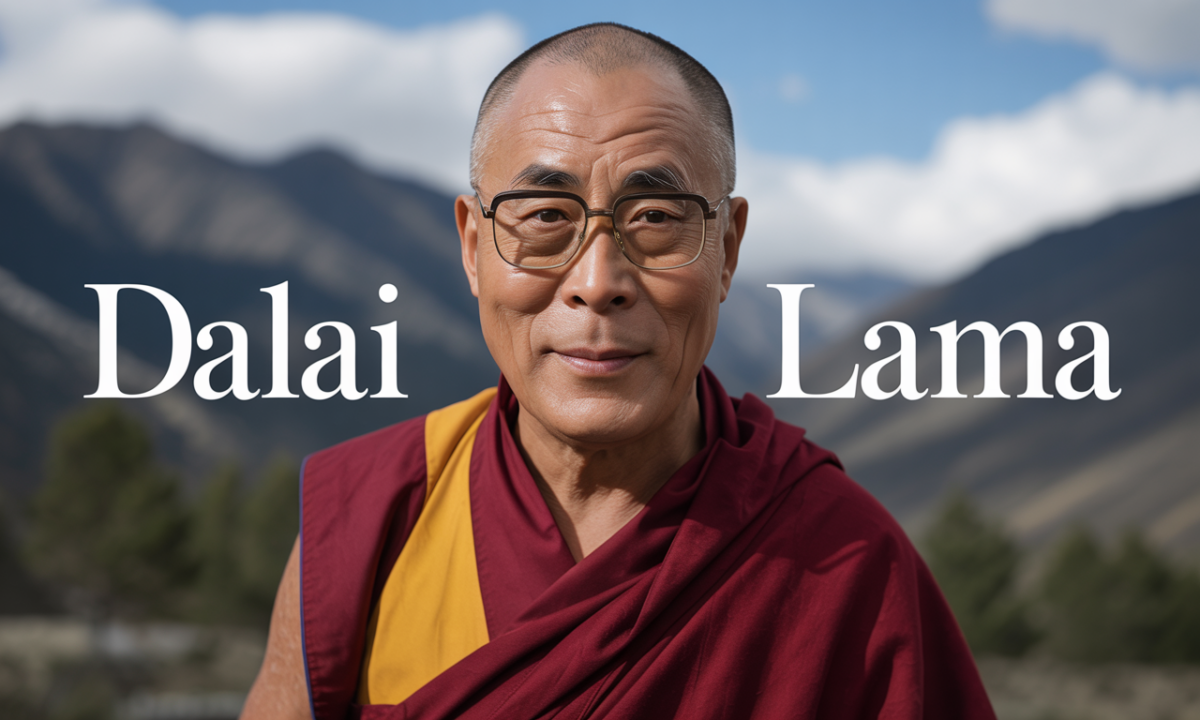
Ah, and visually, imagine a monk with a gentle and smiling face, always ready to give his words of wisdom. He is somewhat the voice of world peace, advocating secular ethics, tolerance, interreligious dialogue, basically a real bridge between cultures.
Who is the Dalai Lama: Tibetan light between tradition and modernity
The current Dalai Lama, Tenzin Gyatso, was born on July 6, 1935, into a farming family in Tibet. He was recognized very young as the reincarnation of the 13th Dalai Lama, which propelled him to a major spiritual and political role at the pinnacle of Tibetan Buddhism.
He is about 1m70 tall, which makes him approachable and human, far from the clichés of an inaccessible leader. He is not married – it’s a monastic life, after all – and he has dedicated all his energy to his people and his ideals.
Before ascending the spiritual throne, he was mostly an ordinary little boy in a village of Amdo. But nothing ordinary in his destiny, since at two years old, he was designated as the reincarnation of the previous Dalai Lama, entering a lineage that blends Tibetan faith and politics.
In fact, he is both a sacred figure recognized by ancient rites and also a historic personality in his own right whose role has evolved over time, especially since his exile in India in 1959, where he founded a Tibetan government in exile.
The extraordinary journey of the 14th Dalai Lama, a life dedicated to peace
Honestly, it’s quite a story. The 14th Dalai Lama was enthroned as spiritual and temporal leader at only fifteen, during the Chinese turmoil. A time when Tibet received little international recognition and faced heavy external pressure.
In 1951, he signed a controversial agreement with China which marked Tibet under Chinese sovereignty. The episode of his exile in 1959, after a bloody uprising, remains a key moment: he managed to gather between 80,000 to 100,000 Tibetans to flee to India, which seems crazy in terms of organization and courage.
Since then, he has waged a peaceful struggle for Tibet, both through diplomacy and dialogue, refusing violence despite the harshness of his fight. In 1989, this strategy earned him the Nobel Peace Prize, an international recognition that gave him even more weight.
In 2011, a big decision: he relinquished his political role to promote democracy in his government in exile. It’s nice to see this guy step back so the youth can take over. It’s no small thing; it’s a real turning point.
The major milestones of the career and remarkable successes of the Dalai Lama
Tenzin Gyatso’s journey is an impressive succession of events and commitments. He became political leader in 1950 before even turning 16, which is already incredible. He signed the 17-Point Agreement in 1951, a compromise with China that marks Tibet forever.
He founded a government in exile in Dharamsala, India, a true moral capital, and has defended the rights of Tibetans against Chinese authorities for decades. He is the one who popularized and adapted secular ethics, a universal message that goes beyond religion.
Among his successes, there is obviously the Nobel Peace Prize in 1989. But he also managed to create dialogue between often tense religions, promoting harmony among diverse traditions – a real bridge between cultures.
In 2025, he remains an essential symbol and a voice for global peace, still very active in his humanitarian and spiritual missions, traveling a lot to spread his message.
Secret private life and surprising anecdotes about the Dalai Lama
For those who think a religious avatar like him is inaccessible, think again. Tenzin Gyatso is above all a simple man, known for his warm smile and discreet humor. He likes to share anecdotes about his youth or unusual encounters during his travels.
An anecdote? In 2018, he mentioned the possibility that his successor could be a woman, or even non-Tibetan, which surprised quite a few people. He likes to break the codes, this guy.
He also has this little habit of reminding us that we are all human above all, not indisputable heroes. And this taste for “Tibetan democracy” since the 90s, while he could have remained all-powerful, almost sounds like an act of rare political generosity.
He also surrounds himself with many spiritual masters, like the panchen-lama and the karmapa, the other major figures of Tibetan Buddhism, showing he never wanted to carry this heavy burden alone.
Recent projects, current commitments, and collaborations of the Dalai Lama in 2025
In 2025, His Holiness continues to work for world peace, interreligious dialogue, and the promotion of universal human values. He relies on a solid foundation to spread his teachings and support Tibetan communities in exile.
He has recently participated in international conferences, where he emphasizes the necessary alliance between ancient Indian knowledge and modern science, particularly concerning understanding the mind and emotions.
His work with other religious and scientific leaders is shifting boundaries. For example, he collaborates with intellectuals and institutions to make his teachings accessible to the widest audience, transcending cultural borders.
Finally, he and his entourage are preparing the upcoming transition regarding the question of his reincarnation, wanting to avoid the political exploitation of this tradition. A process that remains highly followed and controversial worldwide.
What makes the Dalai Lama unique: values and philosophy in a few words
- 🌟 Universal compassion: He is the voice of embodied compassion.
- 🌟 Commitment to non-violence: His struggle is always peaceful.
- 🌟 Respect for religious traditions: He advocates interfaith harmony.
- 🌟 Democracy and modernity: He managed to modernize his position by giving power to the people.
- 🌟 Global dialogue: He promotes encounters between cultures and ideas.
The mysteries surrounding the succession of the Dalai Lama in 2025
There is a lot of talk about the future Dalai Lama. It is a real political and religious headache. The 14th, Tenzin Gyatso, has made it clear that he could well be the last, or that the choice of his successor will not be political but spiritual, even democratic.
This causes scandal on the Chinese side, which claims to want to appoint its own Dalai Lama, a strategy that is not accepted at all by Tibetans in exile and seems provocative on a global scale.
The Dalai Lama has even mentioned the possible birth of a successor outside Tibet, to continue his role in exile, which completely overturns usual traditions and fuels the wildest speculation.
In July 2025, he confirmed that a successor will take his role, but that everything will be done respecting rites, tradition, and especially far from political interference.
Why the Dalai Lama fascinates so much around the world
I think it’s his disarming simplicity that touches the most. He embodies a wisdom that seems accessible, a rare authenticity in the world of public personalities. And then, there is this fight for peace, to preserve a threatened culture, which is told almost like an epic.
His message goes beyond the Tibetan framework; it has become a universal call for peace, for self-reflection, and shared human values. No wonder many cite him as an example, even though he also arouses controversies!
In the end, he remains a figure who makes you want to believe, in a sometimes a bit crazy world. For me, following his words is a bit like finding a lighthouse in the storm.
Honestly, if you want to know him better, you can take a look at a fairly complete accessible biography, it’s a good starting point.
