
Show summary Hide summary
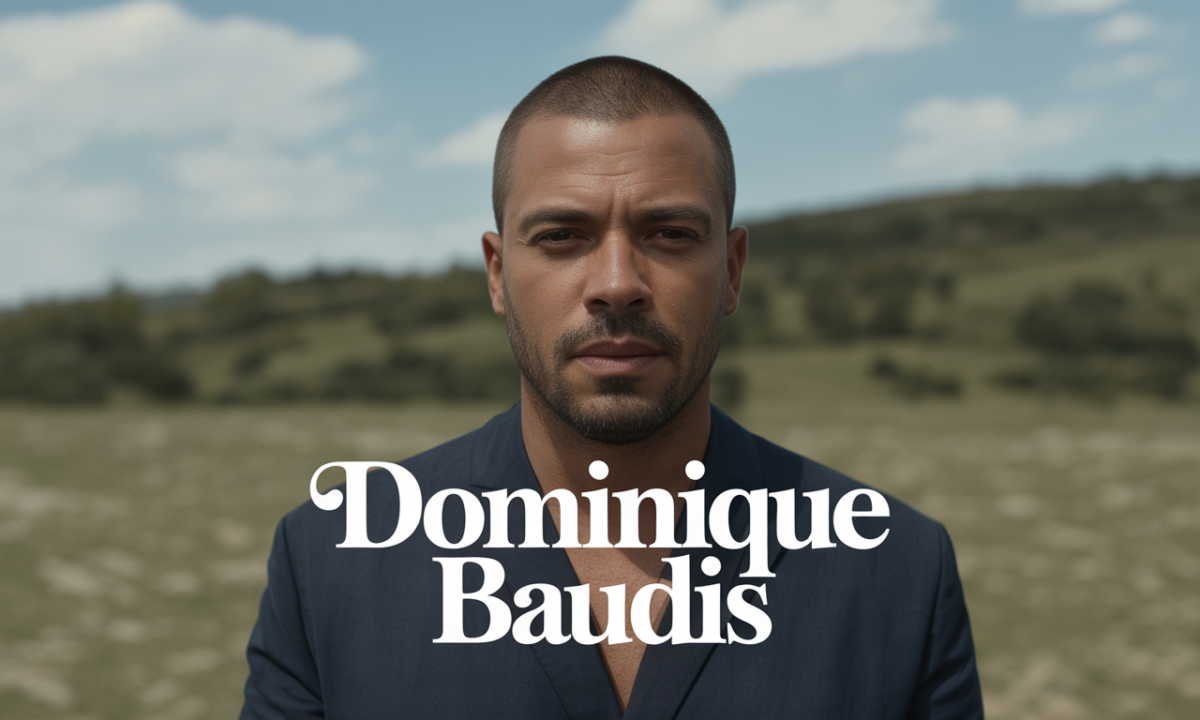
You know Dominique Baudis, don’t you? Born on April 14, 1947, in Paris, he passed away ten years ago, in 2014, leaving behind a huge legacy in Toulouse and France. At 66 years old, while fighting cancer, he had already lived a very full life, to say the least.
His journey began in journalism. He had that sacred fire to tell the world’s stories, especially in Lebanon, where he was a correspondent in the 1970s. Yet, this young man at the time, rather reserved, had an even bigger dream. In 1983, he left the press to get involved in politics in Toulouse, his city of the heart.
One might think his destiny was set, but no! This new life propelled him to the Toulouse city hall, where he truly left his mark, with projects that scared some people a little. Honestly, who would have bet on his metro or the rebirth of the Saint-Cyprien district?
His journey did not stop there; it expanded nationally, especially as head of the Conseil supérieur de l’audiovisuel, and later as Défenseur des droits. A man with a big heart, moved by justice and the defense of freedoms, even when life played nasty tricks on him.
Dominique Baudis: the man behind the name
Imagine a guy who, from his earliest years, was immersed in politics. Son of Pierre Baudis, mayor of Toulouse in the 1970s, Dominique grew up with that energy of the field and responsibility. But what makes him unique is his identity blending curious journalist and politician close to his fellow citizens.
He was not content to be just a politician. His time in Lyonnais then international journalism gave him the ability to listen, to understand others, well before writing or deciding.
This unique mix partly explains why he was able to earn the trust of Toulousans, who simply called him Dominique, a familiar first name in a city he deeply loved. For him, it was not just a matter of career but almost a mission, a nearly passionate commitment.
Many noticed his direct style, sometimes fiery, but always sincere, which marked local and national political life. His advancing age never slowed down this fighter who deeply loved his city and its inhabitants.
Before fame: a curious and committed young man
Before climbing the political ladder, Dominique studied at Sciences Po Paris, a breeding ground for future decision-makers. He was not only a brilliant young man but full of ideas, already passionate about human rights and democracy.
In the early 70s, he began his journalism career in a turbulent era. Correspondent in Lebanon for the ORTF, he covered a war that deeply marked him. Imagine this young man in a torn country, with sometimes very risky reports.
This experience gave him a special aura, a strength that, later, made an impression on his voters. He had that somewhat hyperactive side. In fact, he was sometimes nicknamed the man who never stopped, incapable of spending a day without acting.
Here is what his son Pierre says about him: “He had overflowing energy; that was his strength, even if he didn’t avoid hard blows. But this young man from Paris knew what he wanted, even if politics demanded a different kind of patience.”
Priorities and major milestones of a full career
Going from journalist to mayor, frankly, is not easy. In 1983, he was elected mayor of Toulouse and began a mandate that lasted until 2001. At the same time, he was also a deputy, a mega double role that required a lot of energy.
What strikes is his capacity to drive ambitious projects, some said even a bit crazy. For example, the Toulouse metro, a dream that seemed inaccessible, he realized it. Not only that: the creation of the Abattoirs museum brought life back to a forgotten district.
In 2001, his destiny shifted nationally when he was appointed president of the Conseil supérieur de l’audiovisuel (CSA). There, he became a pillar of digital television, notably by launching TNT. A role matching his stature and skill, but one that distanced him from Toulouse.
From 2011 onwards, he took on another equally important position: Défenseur des droits. There, he merged several institutions dedicated to public freedoms. His wealth of experience became his weapon to fight discrimination and defend children.
The major milestones and highlights of his career
- 🚌 1983: Began his mandate as mayor of Toulouse, taking over his father’s torch
- 🚇 Boosted the Toulouse metro, not without initial criticism
- 🏛️ Created the Abattoirs museum to revitalize Saint-Cyprien
- 📺 2001: Appointed president of the CSA, became a major player in digital television
- ⚖️ 2011: Became Défenseur des droits, the third major mission of his public life
Private life and family: the man behind the public figure
His career is often talked about, but few know that Dominique Baudis also had a rich family life. Married, father of several children, he struggled to balance very active politics and moments with his family.
His son Pierre tells us that despite the challenges, his father was above all a man close to his children, available when he could. A reality not easy to manage with his national political stature and daily battles.
He was also known for his humanity, and those who met him remember a warm man, capable of sincere empathy, rare in this very harsh world of politics.
This intimacy, mixed with his public role, earned him respect and admiration, even if the trials, notably the terrible implication in the Alègre case in 2003, left scars he carried until the end.
A life marked by the Alègre case and its battles
If you have ever heard of this dark story, you know that Dominique Baudis was falsely accused in the Alègre case, involved in heinous crimes, which upended his life. A moment when he had to prove his dignity and innocence in the face of fierce media fire.
He defended tooth and nail the presumption of innocence, a concept that clearly mattered a lot to him. And believe me, it’s not easy when you are under the spotlight. This legal victory in 2005 remains a major chapter of his personal story.
At France 3 Occitanie they tell well the impact this episode had on him – a scar he kept all his life, but which never diminished his will to serve.
This episode, as dramatic as it was, revealed how much Dominique Baudis was a man of principle, ready to fight for justice and truth until the end.
The battles and values that drove him
- 👨⚖️ The presumption of innocence
- 🛡️ The defense of human rights
- 🌍 The fight against discrimination
- 🧒 The protection of children
- 🏛️ Equality and social justice
Recent projects and notable collaborations
Although his death dates back a decade, his legacy continues to inspire. In 2026, in Toulouse, many still mention the urban transformation driven by Baudis. Projects around the Zénith, Airbus, or university infrastructures carry, sometimes unknowingly, his imprint.
What is crazy is that in 2024, just ten years after his death, tributes poured in. His son Pierre spoke to remind what his father represented for Toulouse, a mayor whose political stature far exceeds the city itself.
Key collaborations with major political figures such as Jacques Chirac during his appointment at the CSA or Nicolas Sarkozy as Défenseur des droits, underline the extent of his national influence.
Even his symbolic fortune, rich from his actions and battles, is a true testimony of the man he was, an activist who marked his time, despite his short life.