
Show summary Hide summary
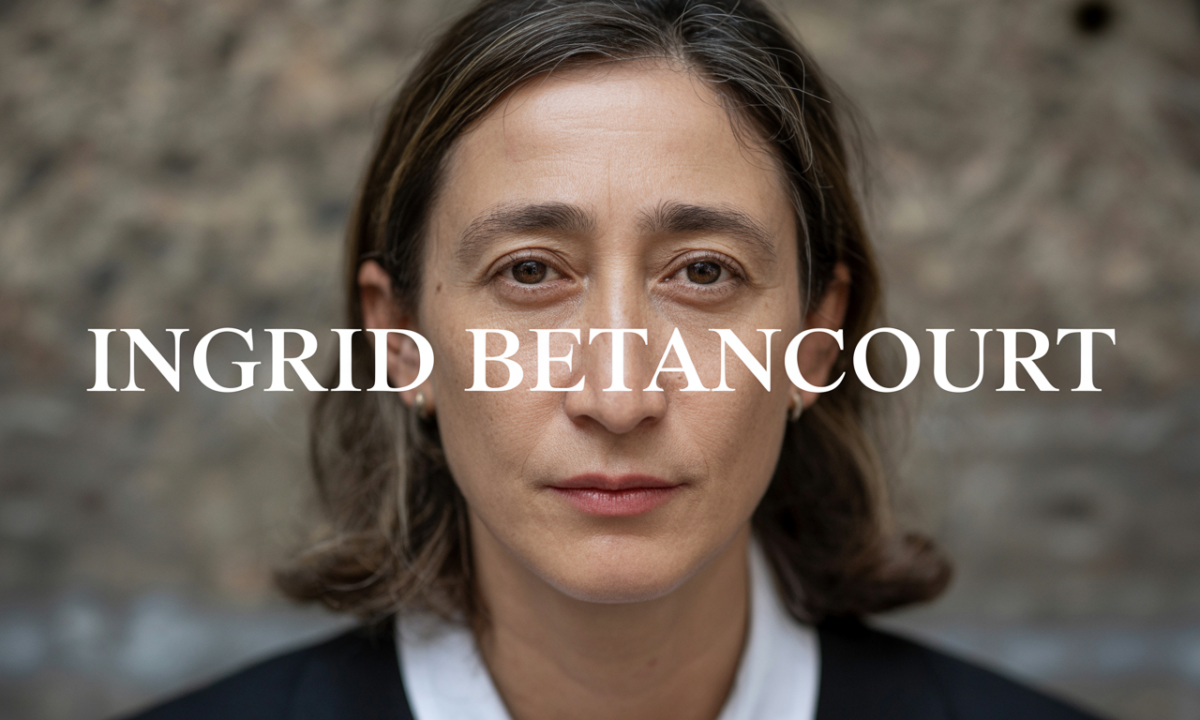
Íngrid Betancourt, born on December 25, 1961, in Bogotá, is a Colombian-French politician whose life resembles a novel, sometimes tragic, often incredible. From a very young age, she was immersed in a political and diplomatic environment thanks to her parents, especially her father, a minister and ambassador.
Honestly, who would have imagined that a young girl from Bogota, raised in Paris, would become a global icon after being held hostage for six years in the Colombian jungle? Her age today is just a detail among many when considering the intensity of her journey.
Her fortune is not the kind to make gossip magazines’ covers, but she has gained a fame and respect that cannot be measured in numbers. It is precisely this resilience, her courage in the face of adversity, that sets her apart, far beyond her stature or public image.
So, who really is Ingrid Betancourt? A committed politician, a mother, a survivor, an environmental activist, but also sometimes controversial in her homeland. I invite you to discover the exceptional life of an extraordinary personality.
The origins and public identity of Íngrid Betancourt
Íngrid Betancourt is the daughter of Gabriel Betancourt Mejía, a heavyweight in education in Colombia, and Yolanda Pulecio, a former beauty queen who became a senator. Her family is somewhat a microcosm of the Colombian elite with one foot in France. Her childhood in Paris unfolded to the rhythm of visits from great names like Fernando Botero and Gabriel García Márquez. (Can you imagine? Spending your afternoons with legends…)
Educated at the Louis-Pasteur High School in Bogota and Sciences Po Paris, she embarked on a political career very young, driven by the fight against corruption and violence that plague her country. Her standing in the political landscape greatly matches her unwavering determination, even though she has always kept a degree of humility.
Before running for president in 2002, she distinguished herself as a deputy then senator, but also as a courageous figure who does not hesitate to publicly denounce scandals, even if it earned her enemies.
Her public identity is therefore a mix of strong commitment and an image imbued with maternal softness and the weight of her responsibilities. A rare combo that is hard to forget.
The struggle and captivity: an extraordinary journey
Her kidnapping by the FARC in 2002, while she was campaigning for the presidency, is a turning point in her life. Imagine, this supposedly “demilitarized” zone, a shocking abduction in the middle of a country in civil war, before the eyes of a stunned international community. It shook global opinion, especially in France where she is also very well-known.
Six and a half years in captivity in the Amazon jungle is unprecedented. She resists, attempts to escape several times, endures illness, hunger, but above all she becomes the symbol of the fight against violence and for peace.
Her spectacular release in 2008, orchestrated by the Colombian army during Operation Jaque, made headlines everywhere. That moment was like seeing the hero return from an impossible adventure, a real turning point in how the Colombian conflict was perceived.
Since then, she has never stopped being in the spotlight, but also at the heart of sometimes heated debates, particularly about her role during captivity, where some tensions with her fellow hostages were revealed.
Íngrid’s private life: love, family, and complexities
Ingrid has been married twice. Her first husband, a French diplomat, gave her two children. Then she married Juan Carlos Lecompte, a Colombian advertiser. Not simple at all, with the hectic political life and the risks she was exposed to.
Her divorce in 2011 caused some waves, especially since her recent past was marked by that incredible captivity. She has always shown herself very protective of her children, sometimes preferring to keep a certain discretion about her private life.
What I find fascinating is that she also openly displays her Catholic faith, which, in her sometimes harsh world, brings a little light and hope. She even met Pope Benedict XVI, which shows how much her inner strength is recognized everywhere.
So, even if the size of her material fortune is not what impresses the most, her human and spiritual heritage is immense, and that makes all the difference.
Recent projects and political evolution of Íngrid Betancourt
After her release, many expected her to fully resume her political career. But Íngrid struggled. She withdrew for a time, breaking with some partners, criticizing corruption even among her allies.
In 2022, she surprised by announcing her candidacy for the Colombian presidency. A comeback expected by some, criticized by others. Despite a difficult campaign, she ultimately supported another independent candidate before withdrawing, showing that her age and a certain wisdom lead her to pick her battles.
She remains very involved in the fight for the release of still-detained hostages, using her international notoriety. In 2026, she is still a listened-to voice, even if she remains anything but a consensual figure in Colombia.
Her collaborations with personalities from the French and international political scenes are also notable, including former president Nicolas Sarkozy, who was very involved in her release.
List of key facts and anecdotes about Íngrid Betancourt
- 🎯 Her first communion given by Pope Paul VI in Colombia when she was a child, a rare and symbolic moment.
- 🎥 A book that caused controversy in which her fellow unfortunate ones sometimes severely criticized her.
- 🛑 A hunger strike in Parliament to denounce corruption, yes, that’s right!
- 🚁 The failed French operation in 2003 to free her, which triggered a diplomatic crisis between several countries.
- ✉️ A poignant letter sent from captivity requesting radio messages from her children – a huge gesture of hope.
Íngrid Betancourt, a woman at the heart of Colombian and world history
So, you see how Íngrid Betancourt is much more than just a political personality. She embodies a struggle that few of us could imagine living.
I admit that despite the criticisms, she exudes an image of strength and resilience that inspires. It’s crazy to think that at her age, she continues to fight for peace.
Her story also reminds us how private life and the public stage can sometimes be contradictory, and that it takes a strong temperament to get through it.
If you want to know more, you can visit her page here, or read more detailed analyses on Encyclopédie Universalis and also on Le Monde.