
Show summary Hide summary
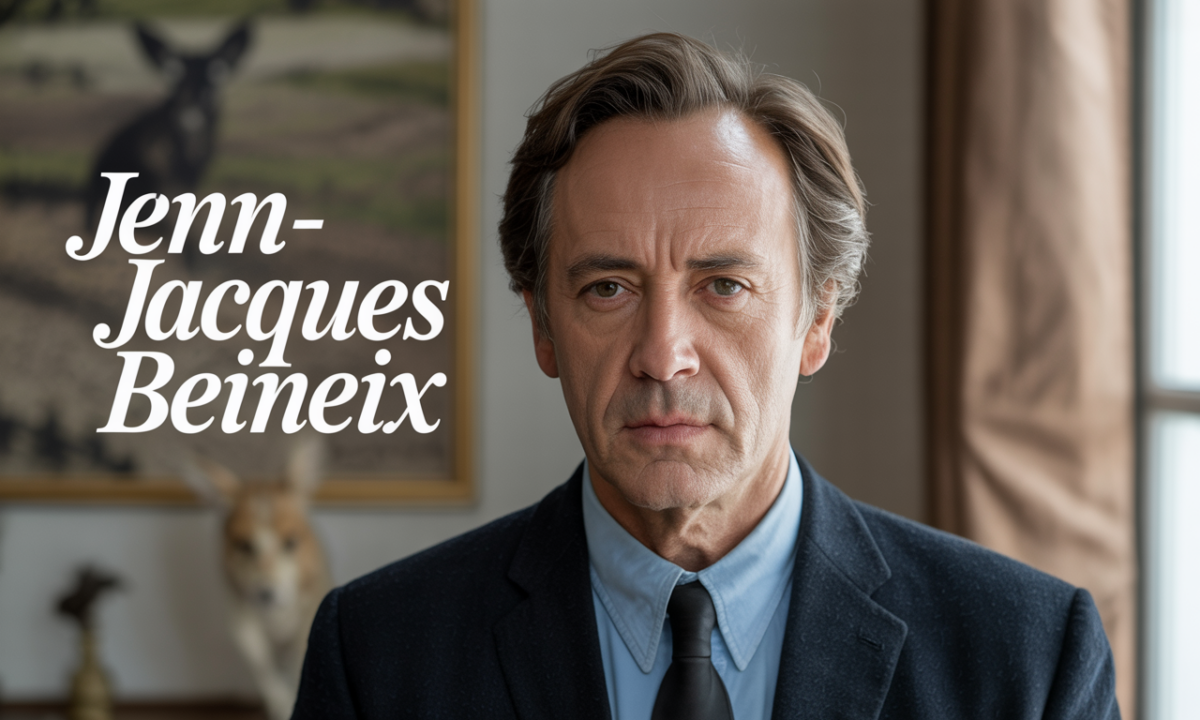
You know, talking about Jean-Jacques Beineix is to dive back into a world where color and style tell more than words. Born on October 8, 1946, in Paris, this Parisian by birth marked French cinema with his unique aesthetic, the one called “cinéma du look”.
Already young, he dreamed of screens and images. His adulthood was built throughout the 70s, between assisting great names like René Clément and Claude Zidi. I admit that this discreet but solid path had prepared me for what he was going to create.
His first feature, Diva, released in 1981, was a blast! Over 2 million tickets sold, four César awards, a public triumph, and a somewhat harsh critical rejection that still surprises. There was no half-measure with Beineix.
He only made a handful of films, six exactly, but each is a milestone in the history of French cinema. Well, the size of his work does not make the fortune of posterity, but the style remains engraved.
Jean-Jacques Beineix, a director with an unforgettable look
Before being the filmmaker who shook the 80s, Jean-Jacques Beineix was a young Parisian man with a quiet life facing the artistic turmoil that would engulf him. Son of an insurance director, he attended Parisian high schools and even tried medicine! Crazy, right?
But the May 68 revolution changed everything. He abandoned his studies, tried the IDHEC, the National School of Cinema, unsuccessfully, then gradually climbed the ranks as an assistant director.
His first steps on sets like Les Saintes Chéries or alongside René Clément forged his knowledge of cinema. He was not just a lucky young man, but a true hard worker.
Beineix always claimed his independence by creating Cargo Films, his production company, to keep control over his style and projects. A young director, yes, but with quite a strong presence from the golden age of cinéma du look.
Career path before fame and first steps in cinema
He worked as an assistant director for about ten years. Imagine living at the pace of film sets, learning on the job with masters like Claude Berri or Claude Zidi. It wasn’t easy, it forged character!
In 1977, he finally went solo with a short film, Le Chien de Monsieur Michel. And guess what? He won an award at the Trouville festival. An unexpected hit.
This short served as a springboard for his first film, Diva. It was a spectacular entry, the one that was supposed to establish him for good, with its flashy look, suspense, and unique visual universe.
Career and major successes: between triumphs and setbacks
Diva, released in 1981, really made an impact. This young director had succeeded in combining aesthetics, music, and thriller in an explosive cocktail. Fortune didn’t just fall on him like that, but this public success clearly gave a boost.
But beware, not everything was easy. His next film, La Lune dans le caniveau, presented at Cannes in 1983, was a serious flop. I admit, it must have been a big shock after the euphoria of Diva. Cannes was not always kind to him.
And yet, in 1986, he managed to strike hard with 37°2 le matin. Inspired by Philippe Djian’s novel, this film shook France. We don’t forget Béatrice Dalle and Jean-Hugues Anglade, making this film a cult quasi-totem for a generation.
This success went beyond the French target, with a nomination for the Oscar for Best Foreign Film, no less! The success is all the more impressive since it was a very intimate film.
Private life: between love, family and confidences
Jean-Jacques Beineix was not just a director; he was also a man attached to his family. Mr. Beineix lived with Agnès, his wife, until the end. Together, they formed a kind of anchor in this sometimes crazy world of cinema.
He had a daughter, Frida, born from a previous relationship with actress Valentina Sauca. He kept his private life carefully, away from the spotlight. I like to think that behind the shiny image, there was this modest side that contrasts with his flashy films.
And he never hid behind his stories, even when criticism raged, or when luck turned its back on him. Like that hard blow when Yves Montand died during the shooting of IP5, with an unfair rumor on top.
Anecdotes and surprising details about Jean-Jacques Beineix
Among the little surprises, did you know he refused Hollywood projects that could have propelled him further? For example, The Name of the Rose or Alien 3. This choice shows the director’s independence and strong character.
Another anecdote: that famous anti-AIDS commercial clip, Il ne passera pas par moi, in 1987. A discreet but striking commitment. Cinema did not do everything in his life, but he had a sense of message.
Another striking fact is his difficult return to cinema in 2001 with Mortel Transfert, a commercial and critical failure. He put everything into it, including his fortune. It makes one think about the challenges of a director’s career.
Recent projects and notable collaborations
In the 2000s and 2010s, Beineix turned to documentaries for television, a territory where he could take his time and address various topics like science or art.
In 2015, he even ventured into directing theater with a play about Kiki de Montparnasse, an intense story far from classic cinema. It shows his desire to express himself differently.
He was also very involved in festivals, such as the Tokyo International Film Festival where he was jury president in 2016. A man still engaged, despite the ups and downs of his career.
His first novel, Toboggan, was published in 2020, showing that even at an advanced age, creativity continues to flow. A true reflection on love and life, somewhat autobiographical.
Focus on the essential filmography of Jean-Jacques Beineix
Well, he wasn’t very prolific, you might say, but each film really counts. If you want to take a complete look, I recommend this rich and varied filmography.
- 🎬 Diva (1981) – The film that launched him into legend, a true aesthetic gem.
- 🎬 La Lune dans le caniveau (1983) – A flop, but a film with character and a very worked look.
- 🎬 37°2 le matin (1986) – Culminating with a crazy success that stuck him to the spotlights.
- 🎬 Roselyne et les Lions (1989) – A less successful attempt, but showing his taste for the strange.
- 🎬 IP5 : L’île aux pachydermes (1992) – Often noted more for the backstage drama than for the film.
- 🎬 Mortel Transfert (2001) – Return to cinema after a break, unfortunately a commercial failure.
You can find his entire filmography and detailed career on AlloCiné or even on Wikipedia to go further, but frankly it’s worth the detour.