Show summary Hide summary
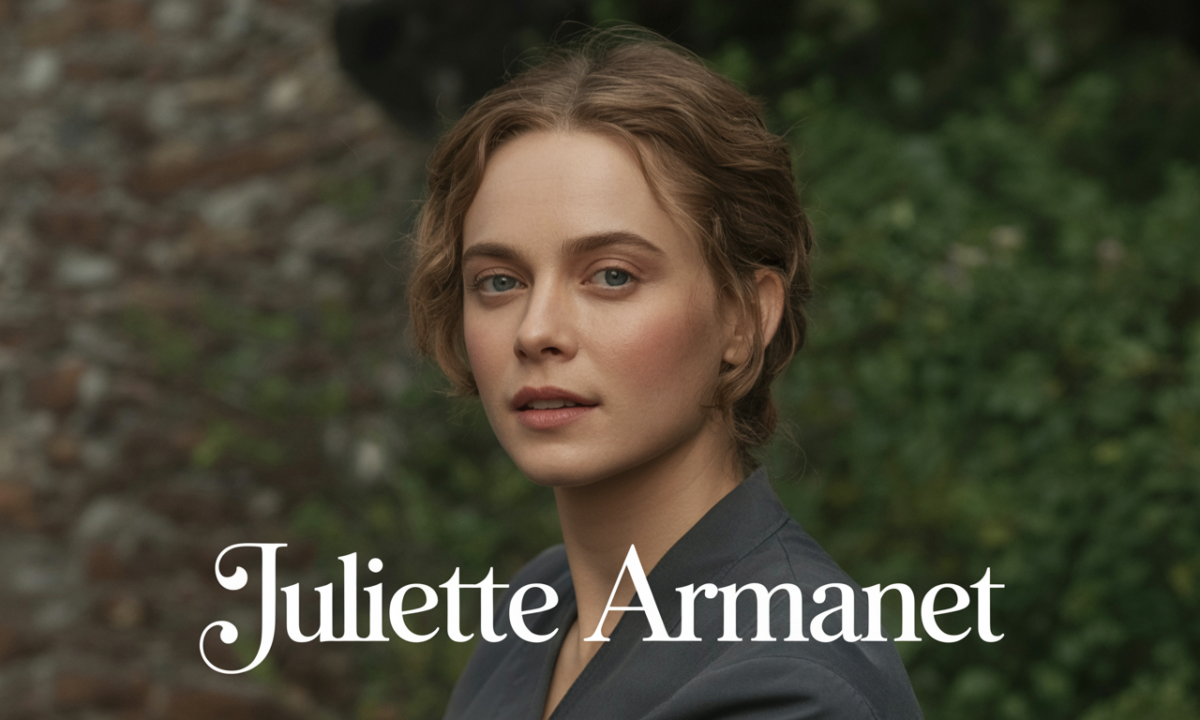
Honestly, Juliette Armanet is a bit of the unexpected revelation at the gates of modern French chanson. Born on March 4, 1984, in Lille, she has this slightly retro charm, but one that really hits today. Her age? She celebrated her 42nd birthday in 2026, and it’s amazing how she still keeps that melancholic freshness from her beginnings.
What always surprises me about her is that tall silhouette, her straight-across bangs, almost a visual signature. On stage, she’s often dressed in black, somewhat in Barbara’s style, but at the same time, the sweet pop touch of France Gall is there. Can you imagine her? A kind of delicate hybrid of those icons, but with her own sensitive and very current universe.
Her path before fame is far from a simple fairy tale. Juliette grew up in Villeneuve d’Ascq in a family passionate about music; her father is a jazz musician, and you could say she was immersed in a literary and melodic environment. She dropped classical music at 11. Not surprising, she already knew what she wanted, but not exactly what she would become.
She also worked in journalism and documentary filmmaking for about ten years, particularly for Arte. It was as if the music was patiently waiting somewhere beneath another layer of herself still searching for her path. Not easy, but when music called her, she never let go of the piano.
Juliette Armanet: a ball of emotion born in Lille
Who is she really? Juliette Armanet is a soft and melancholic voice that reminds one of the great classics of French chanson, but with a uniquely modern touch. As a child, she was already focused on music, composing her first songs at 14, while letting herself be captivated by the lyrics of Bashung or Barbara.
Her public identity is thus a subtle blend of seriousness and playful carefreeness. You know, that vibe of “the sensible big girl with a secret all her own.” That image has stuck with her since her first hit in 2017 with “La Petite amie,” an album that launched her career and earned her the title of Female Singer of the Year by GQ magazine.
She quickly establishes herself as the worthy heir to Véronique Sanson, Michel Berger, and Françoise Hardy, heavyweights of the scene. Her style, which combines French chanson, piano, and electro, she has refined slowly, and frankly, that’s what makes her unique. Yes, she still has that taste for nostalgia and that modern sparkle.
I swear, discovering Juliette is a bit like stumbling upon an old forgotten song, but revisited with a new energy that touches your heart.
Her path before fame: a detour through journalism and music
Juliette’s youth was marked by choices that seemed far from the spotlight. She left Lille for Paris at 16, focused on Letters and theater, a mix a bit bohemian, a bit studious. Then, surprise, she found her path in documentary production, making projects for Arte, including the famous “Éloge de la jupe” in 2011.
But beneath this career away from the lights, music never left her. She composes, creates, even if she somewhat shunned the stage. Her first real breakthrough came in 2014 when she won a contest organized by Les Inrocks, propelling her onto the Trianon stage.
That’s when everything flipped with “L’amour en solitaire,” a song about love, waiting, and illustrating that endearing modern melancholy. A funny anecdote: Juliette almost abandoned a song she couldn’t finish, until her brother came to the rescue. I love these kinds of stories because they make everything so human.
In 2016, she released her first EP “Cavalier seule,” which clearly set the tone: she was here to last, not just pass by like a shooting star.
The dazzling career and great successes of Juliette Armanet
Her first full album, “La Petite amie,” came out in 2017, and it was a tidal wave. This record is a jewel of piano, lyrics, and nostalgia. All the tracks play on sensitive chords, between fragile love and hope, with that delicate signature she shaped.
What’s striking is her ability to mix the intimate with the universal. And missing the album? Impossible. She fills legendary venues like La Cigale and even the Olympia, those kinds of places where few artists cross the barrier easily. Does age play a role? Maybe, but Juliette mainly imposes her style and authenticity.
She followed with her second album, “Brûler le feu,” in 2021, which shows a more assertive, more mature artist, still faithful to that subtle piano behind generous lyrics. The 2022 reissue, with added more disco tracks, proves she’s not afraid to reinvent herself.
Regarding collaborations, she worked with Julien Doré (whose voice brings another color) and Saycet, for a clever mix of electro and chanson. She likes that subtle balance between tradition and modernity.
Private life: Juliette Armanet, between love and well-kept secrets
About her private life, Juliette remains discreet, which is not surprising when you see how much she puts everything into her lyrics. She was deeply in love with a theater man, a story that seems to have greatly nourished her songs. The balance between her public and private worlds is delicate.
She doesn’t expose herself much, but we know she values family and that part of intimacy which is not sliced up for spectacle.
Those close to her describe her as hardworking and determined, a true emotional fighter. I find that beautiful, don’t you? An artist who faces things, who embraces the ups and downs, but keeps moving forward with passion.
Finally, if you want to learn more about her family, childhood in Villeneuve d’Ascq, and influences, I recommend this nice little report that sheds light on this facet.
Striking anecdotes and her clash with Michel Sardou
Now, I have to tell you: Juliette, a personal and honest critic, did not hesitate to express her opinion about Michel Sardou’s legendary song “Les Lacs du Connemara.” The result? A huge controversy on social networks. Honestly, that moment was quite a spotlight, even if that kind of spark is always stressful.
Fortunately, Juliette quickly calmed the situation to return to her musical news, with a powerful single, “Fuguer.” This track is a beautiful, simple piano ballad but full of emotion.
Otherwise, a little curiosity: her role in cinema, especially in Amélie Bonnin’s “Partir un jour,” where she plays a pregnant head chef awaiting the opening of her restaurant. Not bad for a musician who just wanted to make music!
You can read this article that nicely sums up their tense exchange and the reactions that followed.
🎵 3 surprising facts to know about Juliette Armanet 🎵
- 🎹 Her family are great music lovers, with a jazzman father who passed on a crazy love of the piano to her.
- 🥁 She has ten years of experience in documentary journalism before establishing herself on stage.
- 🎤 Her first big hit almost never saw the light of day, a song stuck too long until the providential help of her brother.
Juliette Armanet’s recent projects and collaborations in 2026
In 2026, Juliette continues to show she is not an artist frozen in the past. She keeps that freshness and works in the studio for a new album, whose first tracks show a subtle blend of her roots and a confidently assumed modernity.
She also multiplies collaborations with figures of French electro and pop music, among others Saycet and Julien Doré, in an always elegant and surprising mix. You feel she is digging her groove with almost palpable confidence.
After successful tours, she is also interested in broader projects, like cinema and television, where she highlights her sensitive actress side.
To not miss any of her news, including her videos and live performances, her official YouTube channel is a real goldmine.