
Show summary Hide summary
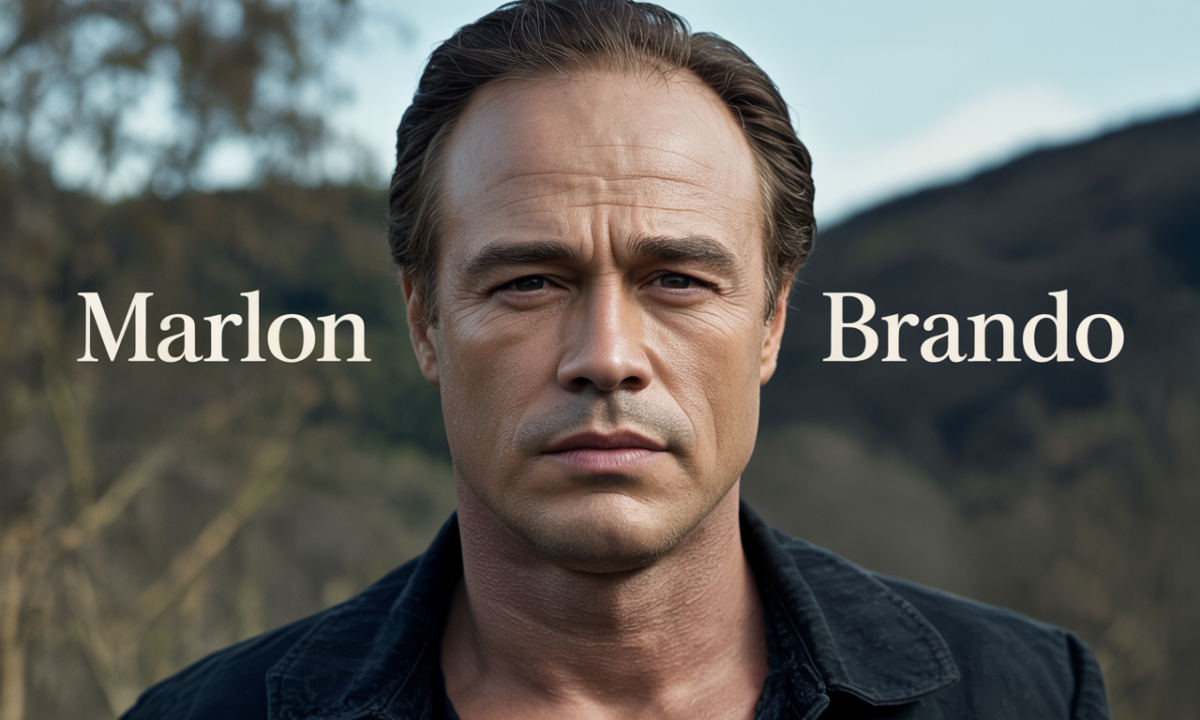
Honestly, when I think of Marlon Brando, it’s like diving into a living legend of cinema. Born on April 3, 1924, in Omaha, Nebraska, he shook everything up with his raw style and intense acting. He died in 2004, but his imprint remains huge, even today.
I swear, his stature as an actor surpasses everything we know. He had that thing – an incredible presence, crazy magnetism. You see him in A Streetcar Named Desire or The Godfather, and bam, you’re caught in his world. Aged 80 at his passing, but powerful like a young man at his debut.
His roots, he was a guy from Omaha, son of a salesman and an amateur actress, quite rebellious. I admire how he swapped his tumultuous school path, having even been expelled from a military school, to invest in theater and shake up Hollywood.
Between his beginnings on the New York stage and his cult roles in cinema, his career is an incredible rollercoaster. His fortune, of course, followed, but what moves me is his quest for authenticity in every character, despite the ups and downs.
Marlon Brando, an actor with an extraordinary career and a complex public identity
Brando was that actor whose stature on stage and screen turned all heads. As a teenager, he was far from calm, sent away from military school for indiscipline. His age did nothing to diminish his courage: at 19, he arrived in New York with only a burning passion for theater as his weapon.
You know, he studied the acting method with Stella Adler, a rigor opposite to the classical. This style he adopted completely blew up traditional acting, giving a breath of fresh air, both visceral and natural. A real pioneer who influenced a whole generation, you can still feel it today in cinema.
His public identity is full of contrasts: icon of rebellious masculinity and yet hypersensitive in his roles. That guy never wanted to be a standardized actor. The acting method, he popularized it, even though his rebellious nature often created conflicts with Hollywood.
Before fame: a young Marlon in search of his place
His path before exploding in Hollywood was built against all odds. First a rowdy kid, then a student expelled from his military school. At 19, he heads to New York, determined to make a place for himself in theater. With support from his mother and older sister, an actress, he sharpens his craft. The masterstroke? His role on Broadway in A Streetcar Named Desire, where he imposes his raw energy.
Ah, it’s crazy really: that period was truly the crucible of his unique style. He devours roles, marking minds with his acting oscillating between heartbreaking poetry and violent reality. That era forged his reputation as the “wild” man of cinema.
The career and successes that marked cinema
So hold on, because his career is a firework display. He debuted in The Men (1950), an intense drama about war veterans, then triumphed with A Streetcar Named Desire in cinema in 1951. Have you seen his Stanley Kowalski? Unforgettable.
His Oscar for On the Waterfront (1954) is the culmination. Rest assured, he also starred in The Godfather, yes, that role of Don Vito Corleone changed his life. And guess what? He rejected his Oscar, a protest gesture against the representation of Native Americans in cinema. Respect.
Other notable films? Last Tango in Paris, Apocalypse Now or even the musical Guys and Dolls. I won’t lie, he had that ability to reinvent himself, to defy expectations. Despite a few flops, his impact remains colossal.
Private life: a complex man away from the spotlight
In his intimate life, Marlon was no less. Married three times, to Anna Kashfi, Movita, and Tarita Tahiti, he had 14 children. Yes, 14… His life was as tumultuous as his acting. A somewhat wounded bear side, no doubt, who didn’t always want the spotlight on his close ones.
He spent a lot of time away from Hollywood, on his Polynesian island. That’s where he found peace, far from the spotlight. And honestly, you feel that his age and career led him to reflect on what truly matters: family, inner peace, far from the turmoil of fortune and fame.
Surprising anecdotes and prestigious collaborations
An anecdote that always makes me smile: during the filming of Mutiny on the Bounty, he spent weeks demanding changes to the point the budget exploded… That earned him quite the reputation as a difficult actor. Yet, it just shows how perfectionist (or stubborn) he was.
And then, Francis Ford Coppola brought him back into the spotlight with The Godfather, a huge turning point. He also worked with big names like Charlie Chaplin, you know, it was the golden age of cinema. Even in his later years, with films like The Score, he continued to surprise and captivate.
- 🎬Oscar for On the Waterfront in 1954
- 🎭Master of the naturalistic acting method
- 🌴Retirement in Polynesia
- 🎥Memorable collaboration with Coppola and Bertolucci
- 💔Tumultuous but rich private life
An actor who redefined American cinema and its legacy
Marlon Brando is first and foremost a revolution in American acting. His fortune, certainly, is one of the largest of his era, but his legacy goes far beyond money. The naturalness he imposed, the emotions lived on the surface, he popularized those. That alone.
You know, he also laid the foundations for a new generation of actors who seek to embody rather than just play. That guy, despite his excesses, changed cinema forever. He brought more authenticity, more humanity, and just for that, I feel lucky to watch his films.
In 2026, his style still influences many actors, confirming his status as an undeniable icon. He wasn’t perfect, far from it. But that’s precisely what makes him so touching and real, don’t you think? With an age that gave him time to rethink his career, he remains that giant.
To know everything about his fascinating life, you can dive into a complete biography on Gala or take a look at his filmography on IMDb. It’s a unique journey, which I highly recommend.