
Show summary Hide summary
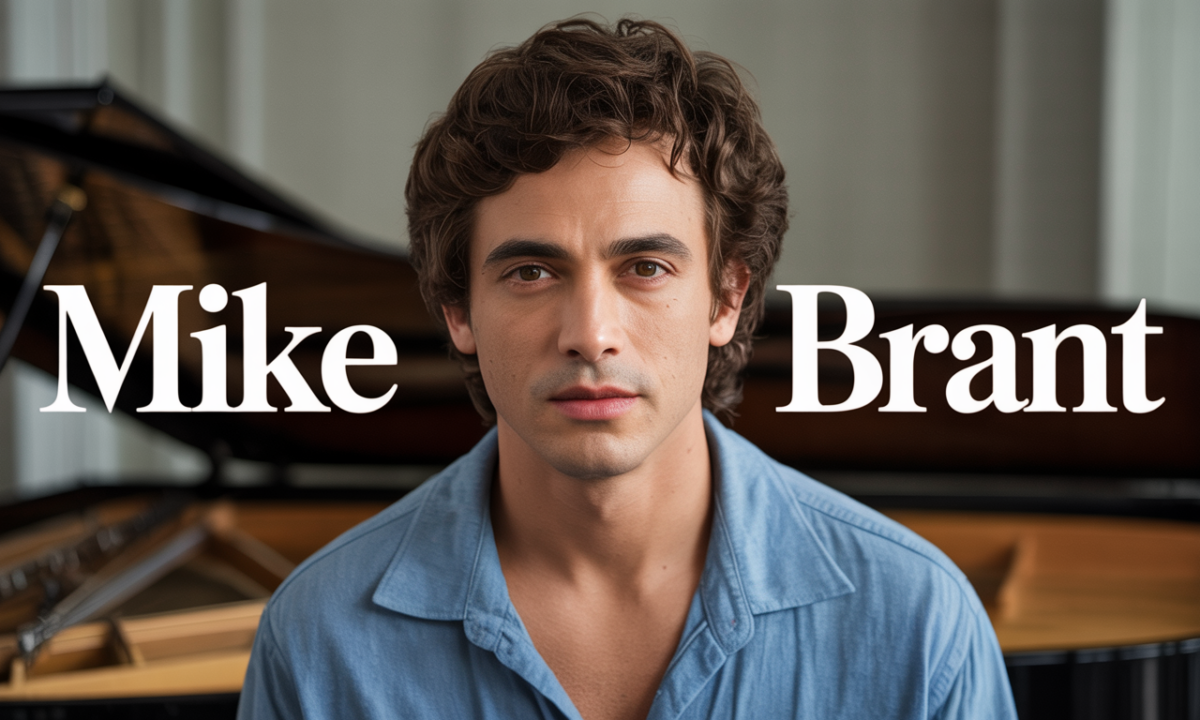
You surely know Mike Brant, that incredible voice of the 70s that still resonates even 50 years after his disappearance. Born on February 1, 1947, in Nicosia, on the island of Cyprus, he left an indelible mark on French song, despite a career as dazzling as it was tragic. His age at the time of his death remains shocking; he was only 28 years old.
Frankly, it’s crazy how such a young boy was able to win so many hearts in such a short time. Mike did not speak a word of French upon arriving in France; he learned his songs phonetically, a true leap into the unknown. And yet, hits like “Laisse-moi t’aimer” or “Qui saura” have become classics of the musical landscape.
But Mike Brant was more than just a singer. It’s also the story of a child born in a Jewish refugee camp in Cyprus, caught between hope and pain, with deep roots marked by the Shoah and war. This adds a depth and a sad poetry to his songs that is felt intensely.
His fortune, although built on a short career, was significant for the time, with around 15 million records sold. Yet behind the success, there were also many personal struggles, a malaise that eventually prevailed. This is a destiny that makes you want to listen to his music differently.
Mike Brant: from refugee camp to French singing icon
Mike Brant, or rather Moshé Brand, is the son of Polish Jewish parents marked by World War II and the Shoah. Born in a refugee camp in Cyprus, he arrived with his family in Israel in 1947, where he grew up in a modest atmosphere, between manual work and early artistic passions.
Surprisingly, this shy young man did not speak much before his fifth year, but he very early had a devouring passion for music and singing. Strangely, his beginnings were in international music; he sang without knowing what he was singing, notably in English, to win over his Israeli audience.
With his brother Zvi, an accordionist musician, he formed in adolescence a group called “The Chocolates.” Local success was only the prelude to a real career. It was in Tehran, in 1968, where he performed in a club, that he fortuitously met Sylvie Vartan and Carlos, who encouraged him to try his luck in France.
Mike Brant’s age at this departure to Paris was 22 years, a young man full of hope but without French in his bag. A real challenge, but his melodic talent and powerful voice did not go unnoticed and quickly opened the doors of success for him.
Rapid and triumphant career: the unforgettable hits of Mike Brant
Mike Brant’s career was an intense race between 1969 and 1975. His first big hit, “Laisse-moi t’aimer,” exploded in spring 1970 and conquered France, then Europe. People just couldn’t get over it; that voice capable of stirring everyone had something magical.
He multiplied songs that left their mark: “C’est ma prière,” “Qui saura,” “Rien qu’une larme,” all sold by hundreds of thousands of copies. He performed over 250 concerts in 1973 like a true stage marathoner.
Curiously, Mike Brant wrote few of his own lyrics. He often sang songs written by others, sometimes in French that he learned on the fly. This paradox gave a very particular charm to his music, which felt both raw and polished.
In 1974, Mike was found on international tours, including in Israel, where he supported his compatriots during the Yom Kippur War. His collaborations with producers like Jean Renard or Charles Talar sculpted this unique, very recognizable sound that still moves hearts today.
Private life and turmoil: behind the scenes of star Mike Brant
Mike Brant’s private life was far from a fairy tale. He had a romantic relationship with a Danish flight attendant, but this story ended painfully, which greatly affected the singer. These disappointments added to enormous pressure and deep malaise.
His professional entourage was not always benevolent. A producer, Simon Wajntrob, was even accused of abusing him, betraying his trust, which threw the young man even further into depression.
A first suicide attempt in November 1974 shocked everyone: Mike jumped from the window of a hotel in Geneva, miraculously survived with serious injuries, but it was clear that his balance was fragile. Unfortunately, this tragedy foreshadowed what was to come.
On April 25, 1975, it was the tragic end. Mike fell from the sixth floor of a Parisian building, ending his struggle at 28 years old. His intimate life, his pains, all shattered in that terrible moment.
Secrets, mysteries, and legacy: what Mike Brant left behind
Since his disappearance, mystery still looms over the exact circumstances of his death. Some speak of assassination, others of accident or tragic fall linked to a moment of confusion. Honestly, we are never really sure, which still intrigues his fans.
Mike Brant remains an emblematic figure, supported by a very active fan club, especially in Israel, where a street was even named after him in 2020 in the neighborhood where he grew up. In Paris, a square also bears his name, a nice tribute to this artist who has transcended eras.
His influence extended far beyond France. In the world of hip-hop, for example, artists like Dr. Dre have sampled his songs. His tracks also appear in several recent films, proof of the timelessness of his work.
The fortune Mike Brant accumulated in so few years is not insignificant, but what remains above all is that unique voice, that “young” talent whose fate was struck down. At his age, few could have imagined such a journey.
Essential facts to remember about Mike Brant 🎵
- 🎤 Born in Nicosia in 1947, he comes from a Polish Jewish refugee family
- 📅 Tragically died at 28, on April 25, 1975, in Paris
- 🌟 15 million records sold in just five years of career
- 🇫🇷 Learned French throughout his career, initially singing phonetically
- 🎶 Iconic hits: “Laisse-moi t’aimer,” “Qui saura,” “Dis-lui”
- 🏆 His charisma marked the 70s and continues to influence
To learn more about his fascinating journey and the mysteries surrounding him, I highly recommend this comprehensive article on Mike Brant at Gala.
If you want to see rare documents and family memories, there is also a nice photo resource with his son that you will discover here.
The tragic aspect of his disappearance is also widely covered in the analysis of Femme Actuelle, with moving testimonies.
For a broader view, the encyclopedic biography remains accessible and well detailed on Wikipedia. Finally, the faithful community continues to maintain his memory via the official Facebook page.