Show summary Hide summary
Elizabeth is a first name that you find everywhere, right? In newspapers, on TV, especially when talking about royalty. I have always had this feeling that it conveys something majestic, a bit like a modern fairy tale.
Honestly, every time I hear “Elizabeth,” I think of that strong yet so accessible presence… it always makes me imagine a woman who is both elegant and full of wisdom, you see?
But obviously, behind this first name, there is a whole history, a thousand legends, and a heritage that goes far beyond our borders. Did you know that it is also a first name full of ancient symbols and a popularity that spans centuries?
It’s funny because beyond queens and princesses, Elizabeth, this first name also has that soft, almost familiar sound that you find in all kinds of Anglo-Saxon cultures.
In any case, I won’t hide that I wanted to understand where this first name really comes from, its meanings, its variants… And what a surprise, it all hides an unsuspected richness!
Royal and historical origin of the first name Elizabeth
The first name Elizabeth has its roots in the Hebrew Elisheba, meaning “God is my oath.” Yes, yes, it is far from a simple first name; we are talking about a true religious and cultural declaration. This first name is deeply rooted in Jewish tradition before crossing Europe with strength.
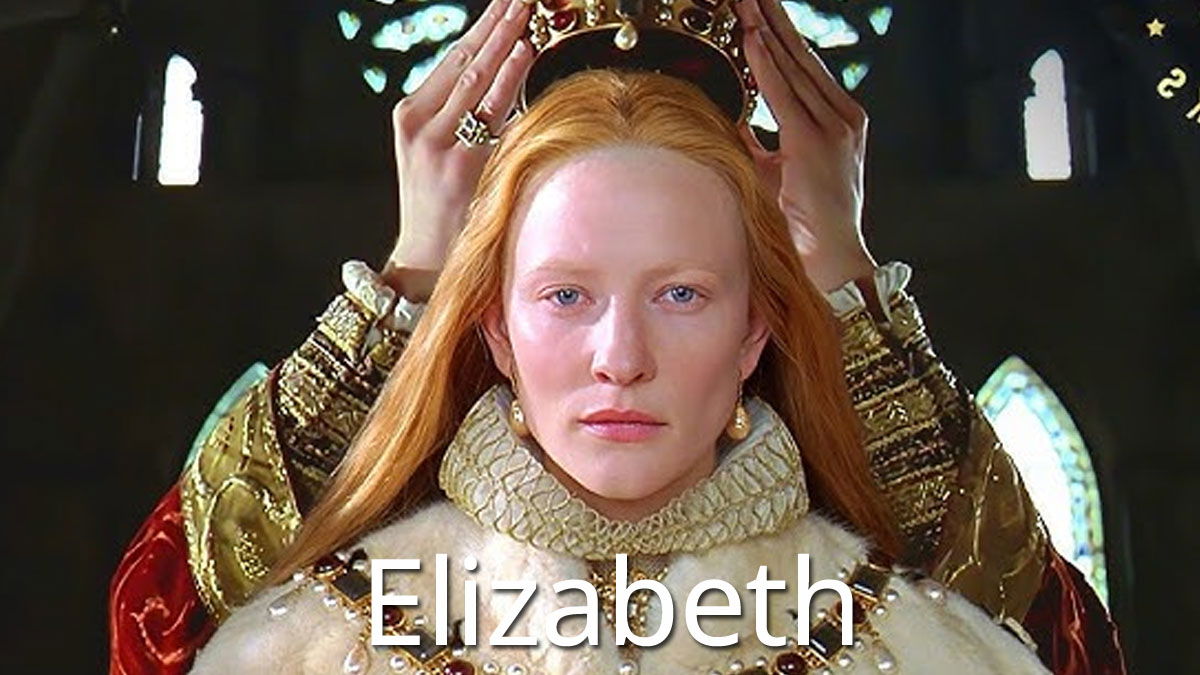
Over time, Elizabeth became established mainly thanks to English History, especially with Queen Elizabeth I in the 16th century, who marked a major political and cultural turning point. And then, well, there is Elizabeth II, who gave incredible longevity to this first name in global memories.
Multiple meanings and interpretations of the first name Elizabeth
So, one might think that “Elizabeth” only means one thing, but actually, there are several nuances. The primary meaning remains “God is my oath,” but it also carries a connotation of loyalty, moral strength, and even robust elegance.
Some see it as a sign of stability and quiet authority, others as a form of softness wrapped in a certain mystery. Honestly, I find it fascinating to see how much symbolism a first name can hold.
Popularity of the first name Elizabeth in the English-speaking world and beyond
Elizabeth is an ultra-popular first name in English-speaking countries for a long time. In England but also in the United States, Canada, Australia, it often appears in the top first names, especially in the first half of the 20th century.
It notably exploded in the 1950s and 60s, thanks to Queen Elizabeth II; her notoriety propelled the first name internationally. Yet, it is a first name we see a bit less among the very young today, but it remains a timeless classic.
Variants, diminutives, and forms of the first name Elizabeth
Elizabeth is also a first name that has lots of fun or elegant variants depending on the country. There are Liz, Lizzie, Beth, Betty, Eliza… plenty of options. Oh yes, and I even know a friend named “Isabel” in Spain, the Latin cousin of Elizabeth.
Each form brings its own little touch: Liz is rather cool and quick, Beth has that soft and intimate side, while the original keeps that historical and noble breath that impresses.
Famous personalities bearing the first name Elizabeth
The first name Elizabeth has been borne by a whole bunch of celebrities. Obviously, the great Queen Elizabeth II, who reigned for over 70 years, is the iconic image of the first name. But also Elizabeth Taylor, the Hollywood icon with incredible charisma.
Not to forget Elizabeth Bennet, that Jane Austen character who embodies sharp wit and modernity in the 19th century. These figures give the first name a versatile aura between royal tradition and assumed modernity.
Character traits and symbolism attributed to the first name Elizabeth
According to some beliefs, Elizabeth is a first name meant to confer inner strength and determination, but also a certain softness. It is sometimes associated with great loyalty and an impressive sense of duty. Fits well, right? Well, it depends on the person, but it’s an idea that circulates around.
I admit that this corresponds well with the image we have of Queen Elizabeth II: a firm and stable woman, able to go through crises without losing that human touch that makes all the difference.
Curiosities and anecdotes about the first name Elizabeth
Did you know that Elizabeth is also a first name celebrated in several countries on November 19? It is the feast of Saint Elizabeth, which gives it a nice spiritual angle.
And then, on the unusual side, Elizabeth is also a unisex first name in a few places, even though it is mostly known as feminine. In the United States, for example, there are masculine versions like “Elisha” that share the same biblical root.
I also like to think that this first name has gone through wars, battles, and social transformations, all while keeping a constant elegance. Not bad for a first name!
- ✨ Deep meaning: “God is my oath” and symbols of fidelity
- 👑 Popularity linked to British royalty, notably Elizabeth I and II
- 🌍 Common in the English-speaking world with variations like Liz, Beth, Betty
- 🎬 Carried by icons like Elizabeth Taylor and literary characters like Elizabeth Bennet
- 🎉 Celebrated on November 19, with interesting cultural nuances around the first name